Feedback doesn't stop when development starts
From first request to shipped feature — nothing gets lost. Capture every request. Ship what matters. Close the loop automatically.
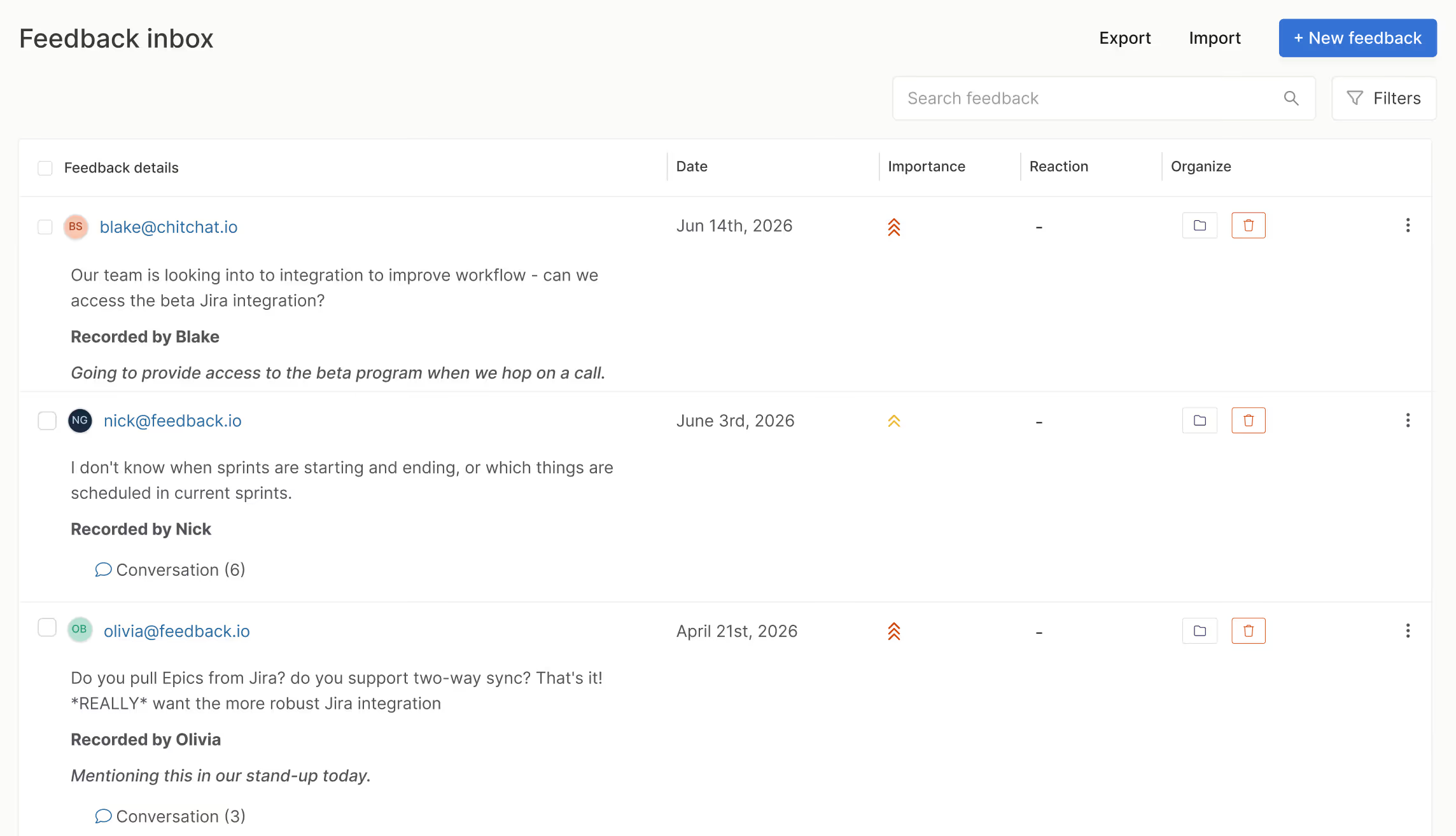

Collect from everywhere. Manage in one place.
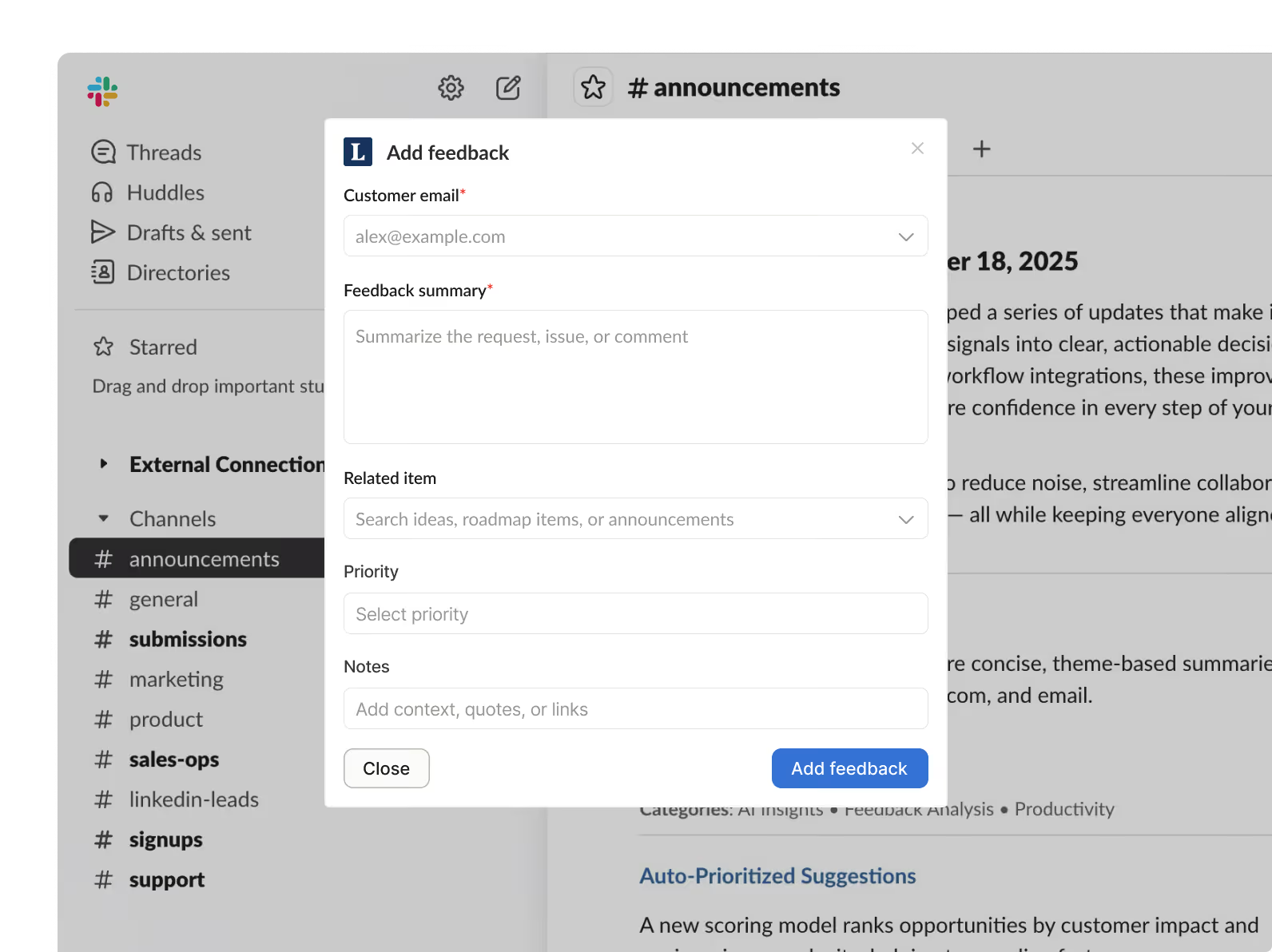
Feedback comes in from Slack, email, your public ideas board, across the web, and directly from your product updates pages.
The loop only closes when you close it.
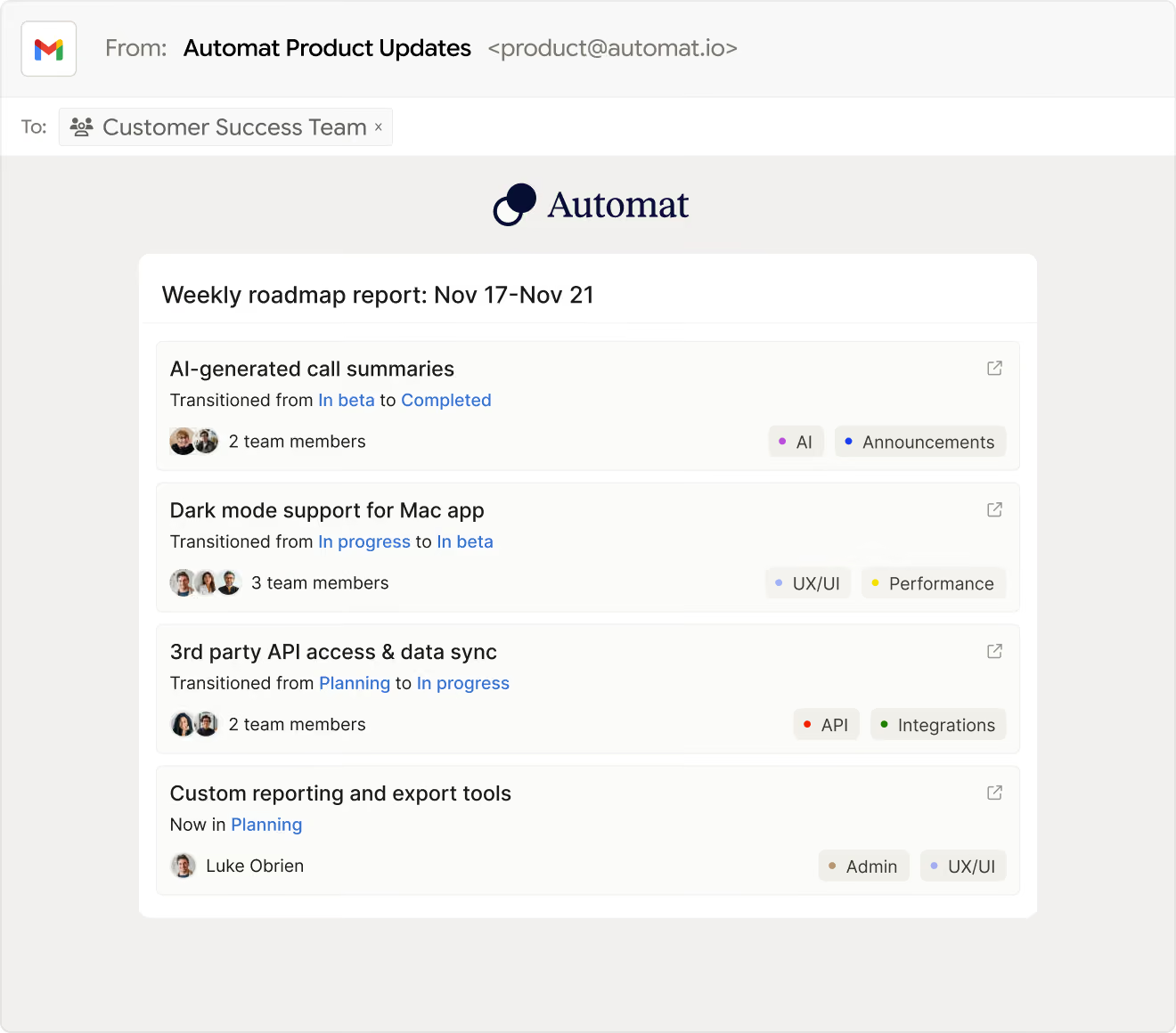
Most feedback processes end when the feature ships. LaunchNotes goes further — customers who asked for a feature get automatically notified when it’s marked complete.
“Our dealers get valuable feedback from clients multiple times a day. With LaunchNotes, that feedback flows straight to the relevant PM. It’s a win-win: dealers feel closer to the business, and our product team has a direct line to end users.”

All the tools to manage and action customer feedback.
Leverage qualitative and quantitative inputs along with AI-powered capabilities to mine signal and deliver real customer value from your feedback.
Chrome extension
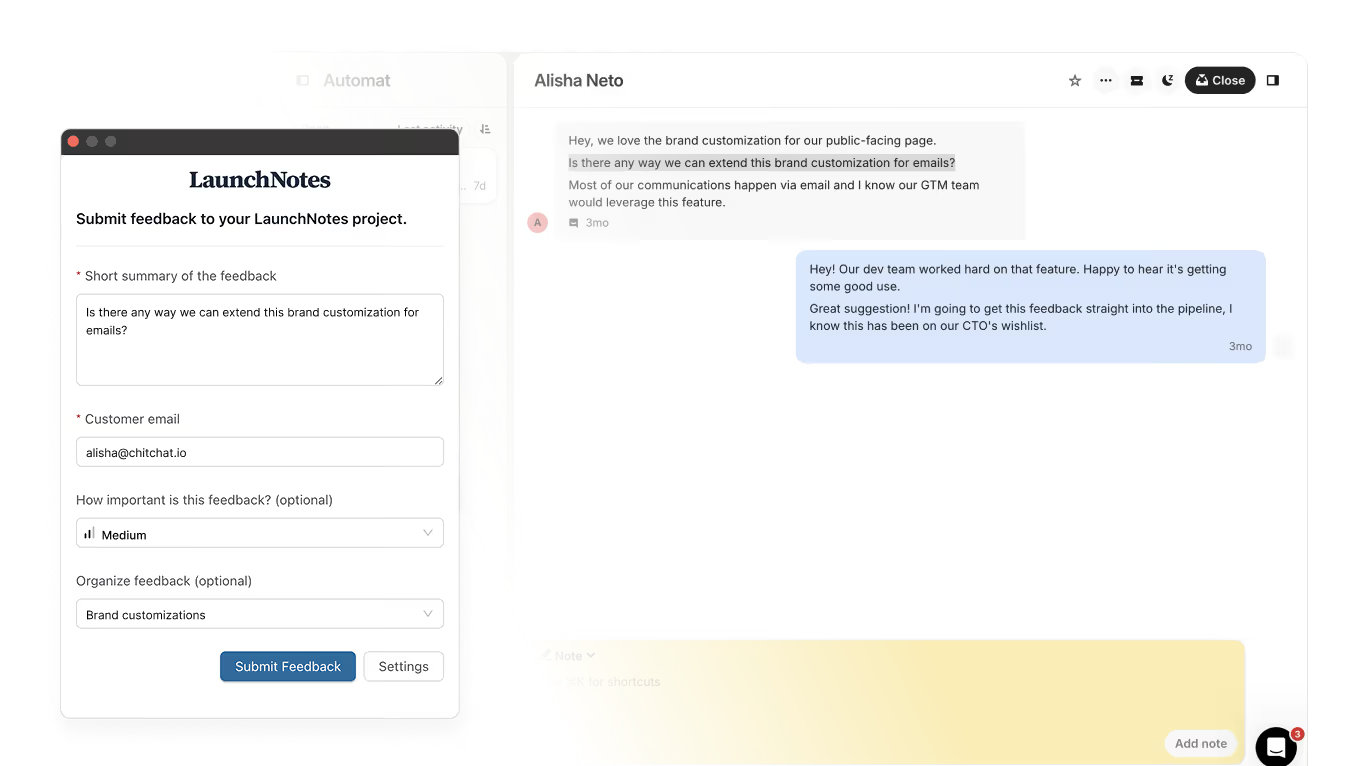
Capture feedback from any website and send it straight to your product team.
Subscriber snapshot
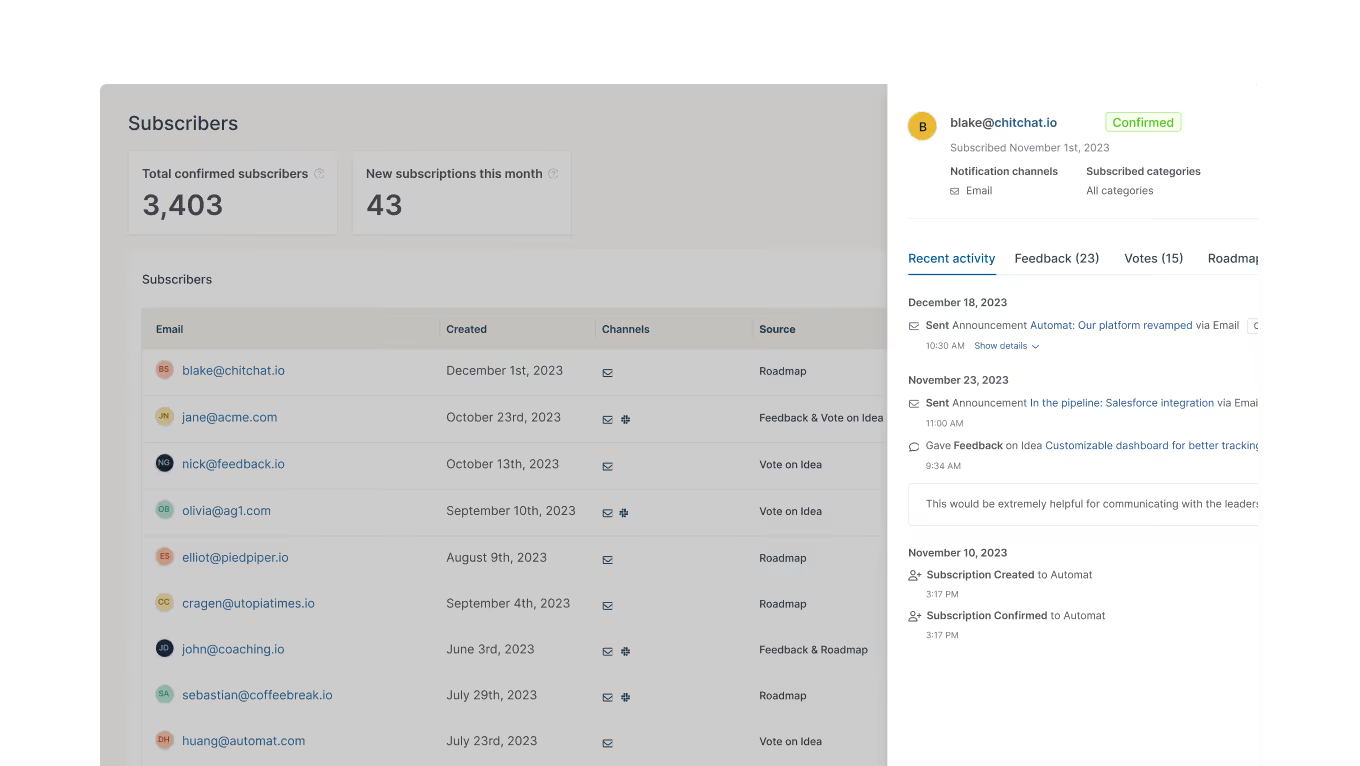
A complete view of each subscriber’s activity: recent engagement, feedback submissions, votes, and the roadmap items they follow.
Ideas and voting board
Give customers a public place to submit and upvote feature ideas.
Promote to roadmap
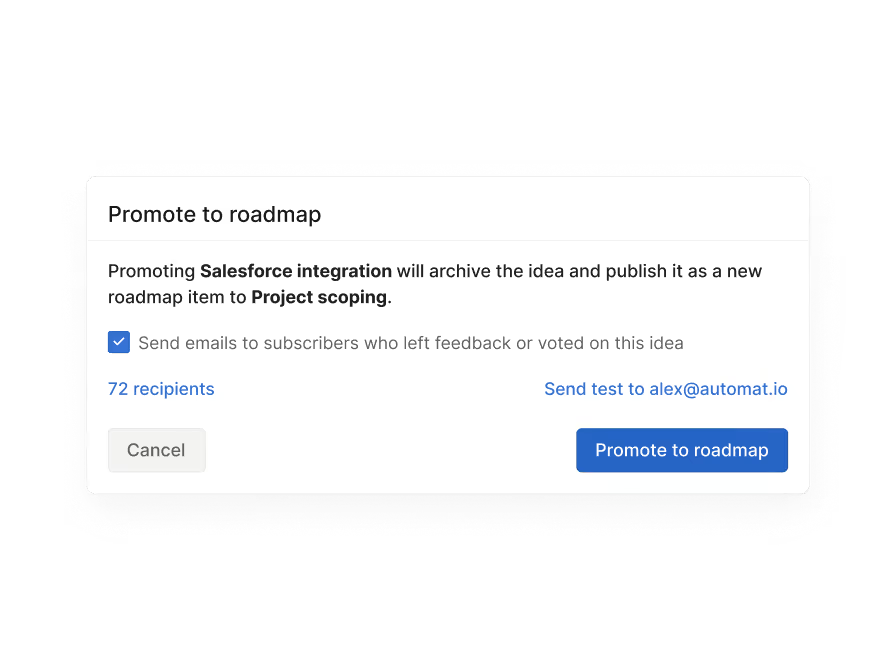
Elevate popular requests directly to your roadmap in one click — customer context, vote counts, and account revenue data travel with it.
Sentiment analysis
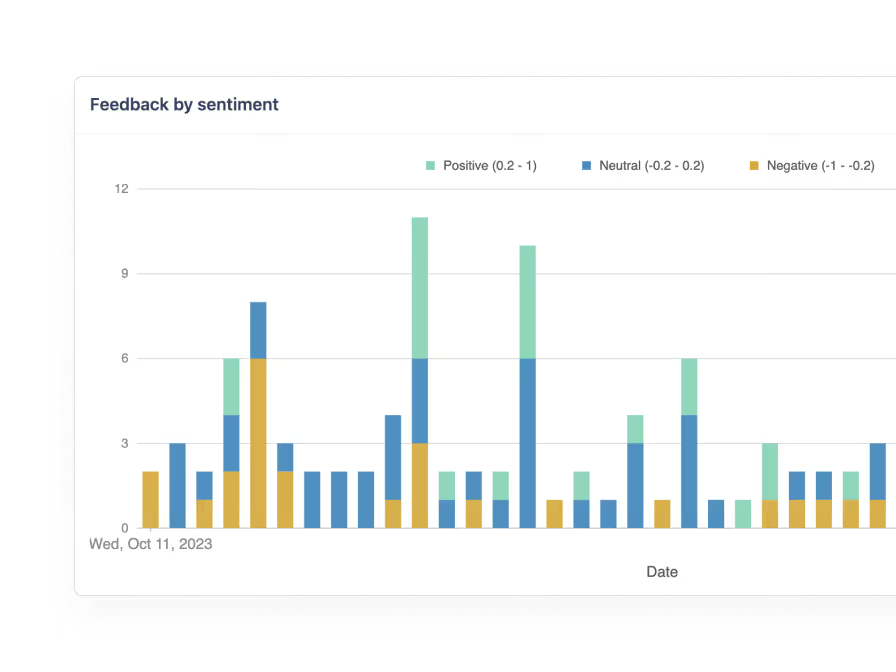
Track how customers react to your product communications and updates over time.
Don’t just take our word for it

“LaunchNotes is mission critical. With $100M+ in annual R&D spend, not telling customers what we build is tripping at the finish line.”
McNeel Keenan
VP, Product Management, Cvent
$100k+
in strategic account expansion
13%
lift in CSAT

“LaunchNotes is how we standardized release readiness at scale. Sales, support and dealers now walk into every conversation prepared.”
Melissa Edmonds
VP, Product Operations, SpotOn

“Product momentum is one of the most powerful growth levers in SaaS. LaunchNotes is the perfect tool for amplifying it.”
Matt Hodges
VP, Marketing, Loom
300%
increase in product engagement
4x
acceleration in product delivery
91%
email open rate
30%
faster release cycles
Enterprise-grade security, out of the box

SOC 2, Type II Certified
This SOC 2, Type II certification demonstrates our commitment to maintaining the necessary protocols to manage and mitigate risks related to enterprise-grade security, availability, compliance, and privacy.
Frequently asked questions
How secure is the data collected through the feedback tool?
Feedback data gets the same security treatment as the rest of the platform, which matters most for enterprises managing sensitive customer data. The platform is SOC 2 Type II compliant, so your feedback and user information are handled to a high standard of protection.
Maintaining customer trust matters for any product organization, and our infrastructure is built to support that. Advanced permissions and data encryption make sure only authorized people can access internal insights.
That's what makes LaunchNotes a reliable choice for organizations that need rigorous compliance and data governance across their product development and communication lifecycle.
Does the feedback tool integrate with our internal Slack channels?
A deep Slack integration lets you turn any message into a feedback entry with a click. Since a lot of internal discussion happens in Slack, this makes sure valuable off-hand insights don't get lost in the scroll.
Your team can stay in the tool they already use while still contributing to the feedback database, which builds a culture of feedback across the whole organization, not just the product department.
It also simplifies alignment, since everyone from engineers to account managers can easily share what they're hearing from the market.
Can we segment feedback by customer type or industry?
Yes. You can filter and segment feedback by attributes like industry, account size, or user persona. That granular view matters for any product organization serving diverse markets.
Understanding that an enterprise customer has different needs than a small business user lets you tailor your roadmap accordingly. Looking at feedback through these different lenses helps you spot niche opportunities or critical blockers for specific segments.
That targeted approach keeps your development effort focused on the areas that are actually strategic for your business.
How does this tool help sales teams during the discovery process?
Sales teams are often on the front lines of gathering market requirements. LaunchNotes lets them log feature gaps directly during discovery calls, so the prospect's perspective actually reaches the product team.
That data is valuable for launch communication too, since it helps marketing understand which pain points to highlight in their messaging.
The result is a smoother flow of information from the sales floor to engineering, which builds better alignment across the company.
Can we allow users to vote on ideas publicly?
Absolutely. You can enable a public ideas portal where customers see suggested features and vote on them. That helps you validate demand before a single line of code gets written.
Seeing which ideas gain the most traction lets you make more confident prioritization decisions, and it gives your community a place to engage with your vision and see what other people want.
That collaborative environment is great for driving early adoption, since you end up building the tools and workflows your audience is actually asking for.
Is there a way to collect feedback without leaving the browser?
A dedicated Chrome extension is built specifically for capturing feedback on the fly. Whether your sales team is on a demo or support is reading an email, they can highlight text and send it straight to the feedback inbox.
That removes the friction of switching apps, which is usually what stops people from logging feedback in the first place. Making it easier for your team to capture insights increases both the volume and quality of the data you collect.
That keeps your product organization fueled by real-time market intelligence gathered from every corner of the company.
What does it mean to "close the loop" with customers?
Closing the loop means notifying users when the feedback they gave has actually resulted in a product change. LaunchNotes automates this by linking feedback entries directly to your roadmap and announcement workflow.
When a feature moves from planned to shipped, the users who requested it get notified automatically. That transparency builds real trust and shows customers their input is genuinely valued.
It turns a one-way suggestion box into a two-way conversation, which drives adoption because customers feel a sense of ownership in how the product evolves.
How does AI help in organizing large volumes of user feedback?
LaunchNotes uses AI-powered topic modeling to automatically categorize and group similar feedback entries. When you're dealing with hundreds of requests a month, sorting them by hand just isn't realistic for any team.
Our AI identifies themes and sentiment, so you can see high-level trends at a glance. That saves hours of manual work and keeps the categorization consistent and objective.
With that groundwork done automatically, you can spend less time organizing spreadsheets and more time thinking through what user sentiment actually means for your product strategy.
How does the LaunchNotes feedback tool centralize incoming requests?
The feedback tool acts as a unified inbox for all customer insights, pulling in data from Slack, email, and direct web entries. Instead of losing suggestions in scattered spreadsheets or chat threads, your team sees everything in one organized view.
That centralization is the first step toward a more professional feedback process, making sure no voice gets ignored. Bringing every request into one place also makes it much easier to spot trends and recurring pain points.
That structured approach lets your team stay responsive while building a comprehensive record of user needs for future roadmap planning.

