Why Loom bought instead of building its product updates page again

Loom is an async video messaging platform that helps teams record, share and collaborate through video. Loom was acquired by Atlassian and is now part of Atlassian's collaboration products.


Loom's VP of Marketing had built a homegrown changes page once before and watched it wither. At Loom, he adopted LaunchNotes the moment it came to market and used it to turn rapid shipping into a growth lever.

Product momentum is one of the most powerful growth levers in SaaS. LaunchNotes is the perfect tool for amplifying it.
Matt Hodges
VP, Marketing

The situation

Matt Hodges joined Loom as VP of Marketing in fall 2019, shortly after its Series B, to take GTM “from zero to one.” Loom raised almost $200M between 2019 and 2021 and was shipping at a rapid clip.

Matt saw that pace as one of Loom's best GTM assets, if customers could see it. “Rapid growth is usually driven by strong product momentum, and strong product momentum wins new business,” he said. Before LaunchNotes, Loom's updates were a mix of sporadic blog posts and emails.

Why LaunchNotes

Matt had seen the alternative. At Intercom, where he led marketing, the team built a homegrown page called Intercom Changes. As the company grew, it got harder to justify R&D time to maintain it.

“At Intercom we invested in a solution that was not core to what we were building for our own customers, and it ultimately didn’t end well,” he said.
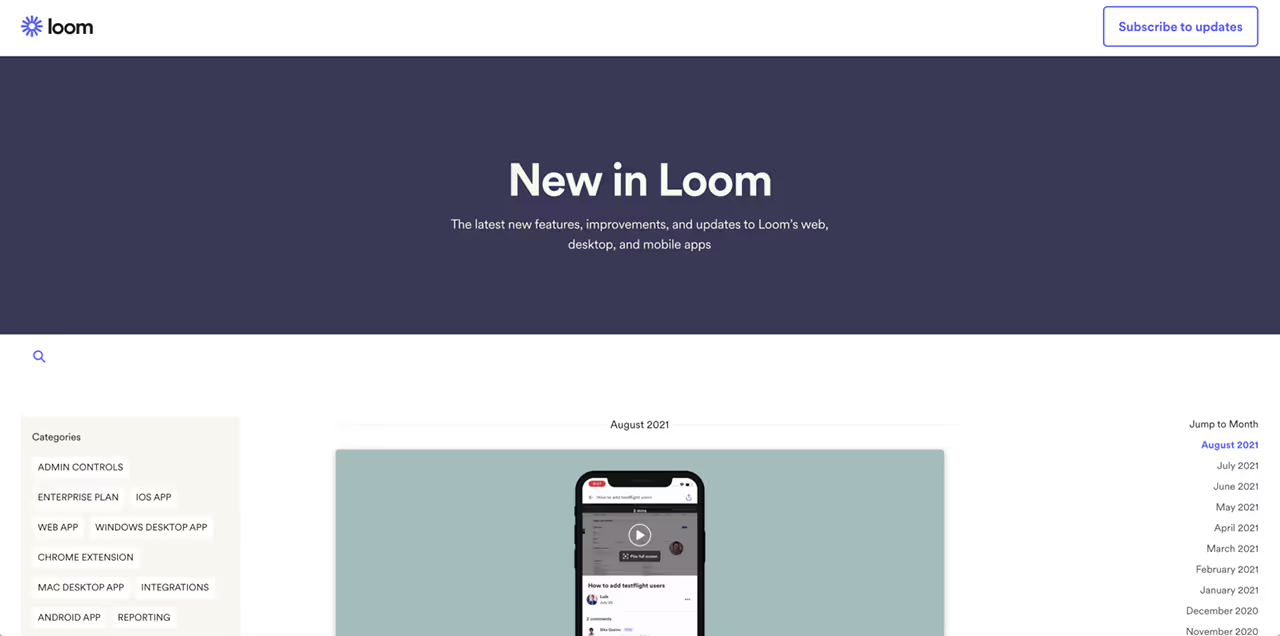
Loom release notes on LaunchNotes

He had also used three other tools in past roles. His criteria for Loom were:

  1. Keep customers up to date without over-messaging them
  2. One place to show how the product was evolving, and where it was headed
  3. Fully owned by product and marketing, with no engineering dependency

LaunchNotes was the only tool that covered all three, including public roadmaps alongside product updates.

A Loom announcement on LaunchNotes

How they use it

  • Announcements and a public roadmap together, so every update lands in the context of where Loom is headed
  • Run entirely by product and marketing, with no dependency on other teams
  • Hundreds of announcements published, making Loom one of LaunchNotes' most active users
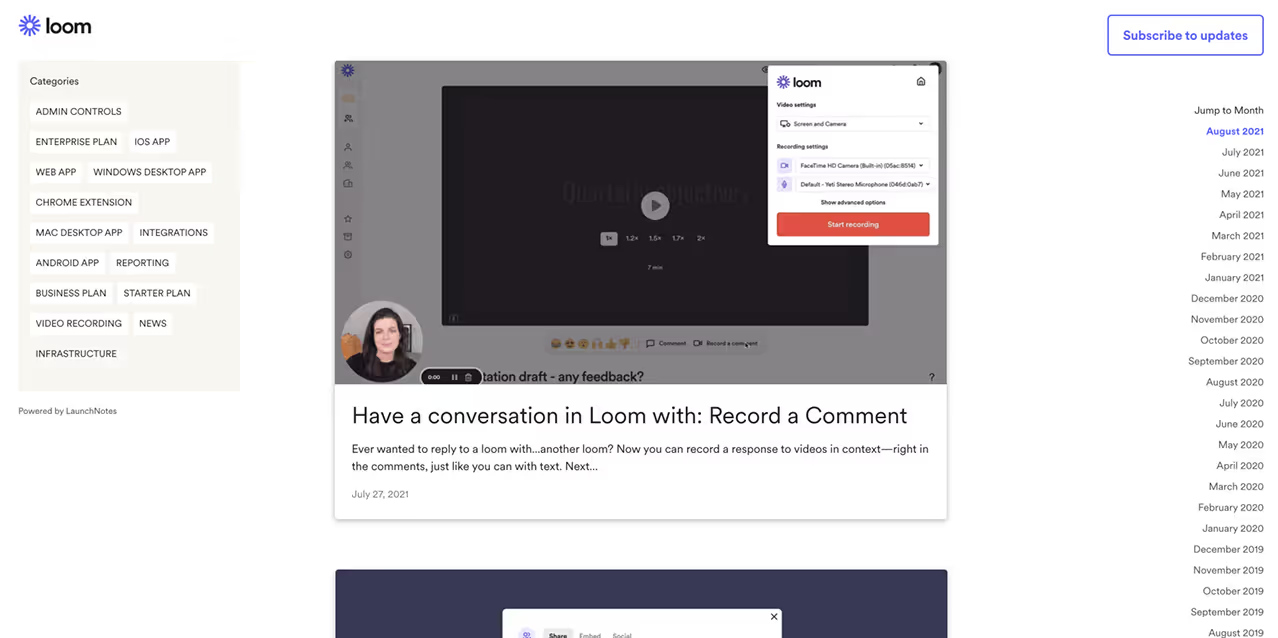
Loom announcement categories

What changed

Loom replaced one-off blog posts and emails with a steady, visible stream of updates. Setup was painless, the team got value on day one, and nothing depended on other teams.

Closing thought
LaunchNotes is one of the only tools I’ve used that requires no dependency on other teams to get going or use on a daily basis.
Matt Hodges, VP, Marketing
Courier
Narmi

Frequently Asked Questions

Loom treats product communication as a growth lever rather than an administrative chore, publishing frequently and turning releases into marketing moments that product and marketing can amplify together.

That success came from making product momentum visible instead of letting it sit buried in engineering. A demo is the fastest way to see how the same approach would work for your own release cadence.

Matt Hodges had already lived through the alternative. At Intercom, where he led marketing, the team built a homegrown solution called Intercom Changes, and as the company grew it became harder to justify dedicated R&D resources to maintain a public changes page.

His conclusion was that investing in something not core to what you build for your own customers rarely pays off, and that with purpose-built tools now available there is no reason for a team to build one. So Loom's engineering time went into Loom's product, and release communication ran on a platform product and marketing could own outright.

No. For Loom, LaunchNotes was a communication channel rather than a document. Matt Hodges' criteria went well beyond a list of shipped items: keep the customer base current without over-messaging them, provide a single place showing not just what shipped but where the product was headed, and let product and marketing own the whole motion without engineering involvement.

A changelog records what happened. LaunchNotes combines announcements, a public roadmap, multi-channel distribution and audience building in one platform. Hodges' point was that communicating updates within the context of where the product is going is what separates it from the alternatives.

LaunchNotes gave Loom's product and marketing teams one shared place to get the word out about new features, with no dependency on engineering to publish. That was one of Matt Hodges' three explicit criteria when he went looking for a tool, and it mattered because product updates had previously been a mix of sporadic blog posts and emails, which he describes as one-off activities that do not set up a go-to-market motion to succeed over the long run.

Bringing both functions around one shared, definitive record is what allowed marketing to amplify what product shipped without friction or delay.

For Loom, product momentum is one of the most effective go-to-market assets a SaaS company has. Their marketing leader believes much of early growth comes from creating loyal fans who amplify your presence in the market.

Regularly communicating new features is one of the most important things a startup can do to set itself up for success. LaunchNotes gives product and marketing teams an easy way to capture and broadcast that momentum.

Loom published frequently, with hundreds of successful announcements through LaunchNotes, which made it one of the platform's most active users. That cadence reflected how central product communication was to the company's growth strategy during its expansion, when it was shipping a steady stream of features and improvements to a rapidly growing user base.

LaunchNotes is built to support exactly that kind of high-velocity shipping without adding manual overhead, since a single published update distributes across the changelog, email, Slack and RSS. Loom has since been acquired by Atlassian and is now part of the Atlassian collaboration ecosystem.

Loom uses LaunchNotes to consistently surface the steady stream of features and improvements it ships, keeping users aware of the product's momentum. In its marketing leader's view, many companies fail to fully leverage the momentum of rapid growth, and he sees that as a missed opportunity.

By making every update visible and easy to share, LaunchNotes helps Loom convert engineering output into marketing moments. This is how continuous product updates become a driver of adoption and word of mouth.

Matt Hodges, Loom’s VP of Marketing, describes LaunchNotes as the perfect tool for leveraging product momentum to grow the business, and his advice to other product and marketing leaders considering it was blunt: just do it, the risk is low and the potential payoff is high.

Asked to describe the platform in one word he chose confidence-building, explaining that it gives current and future customers the visibility they need to bet on your product. He also credits it as the only purpose-built tool he had found for communicating product changes and public roadmaps together.

Before LaunchNotes, Loom had tried a number of point-solution changelog tools, none of which kept pace with how quickly the company was shipping. Matt Hodges also brought a hard lesson from Intercom, where he had led marketing and the team built a homegrown solution called Intercom Changes: as the company grew, dedicating R&D resources to maintain an internal changelog stopped making sense.

He set three criteria for a replacement: keep customers current without over-messaging them, give people one place to see how the product was evolving and where it was headed, and be a tool product and marketing could own outright with no engineering dependency. LaunchNotes was the only option that met all three.

Loom used LaunchNotes to make sure its product momentum actually reached the market instead of staying buried in release notes nobody saw. Matt Hodges, who joined Loom as VP of Marketing in 2019, saw getting the word out about new features quickly as essential to early growth, because it creates loyal fans who amplify the brand.

With hundreds of successful announcements published through the platform, Loom became one of LaunchNotes' most active users. It gave the product and marketing teams a single way to turn every release into a growth driver, with no dependency on engineering to publish.
